Hello, I want to practice singing, how can I do it?
Warm up your voice: Before you start singing, it's important to warm up your vocal cords. You can do this by humming, doing lip trills, or singing scales.
Practice regularly: Like any skill, singing takes practice. Try to set aside a regular time to practice each day, even if it's just for a few minutes.
Listen to yourself: Record yourself singing and listen back to it. This will help you identify areas where you need to improve.
Focus on your breathing: Good breath support is key to singing well. Make sure you're breathing from your diaphragm and not just your chest.
Work on your posture: Stand up straight and keep your shoulders relaxed. Good posture will help you breathe better and project your voice.
Experiment with different styles: Try singing different genres of music to help you develop your range and style.
Get feedback: Consider taking singing lessons or working with a vocal coach to get feedback on your technique and improve your skills.
Remember to have fun and enjoy the process of learning to sing!
唱歌是表达自我和发展音乐技能的绝妙方式。这里有一些技巧可以帮助您练习唱歌: 预热你的声音:在你开始唱歌之前,预热你的声带很重要。您可以通过哼唱、唇颤音或唱音阶来做到这一点。 定期练习:像任何技能一样,唱歌需要练习。试着每天留出固定的时间练习,即使只是几分钟。 聆听自己:录下自己的歌声并回听。这将帮助您确定需要改进的地方。 专注于呼吸:良好的呼吸支持是唱好歌的关键。确保你是用横隔膜呼吸,而不仅仅是用胸部呼吸。 调整姿势:站直并保持肩膀放松。良好的姿势将帮助您更好地呼吸并发出声音。 尝试不同的风格:尝试演唱不同类型的音乐,以帮助您发展自己的音域和风格。 获得反馈:考虑参加歌唱课程或与声乐教练合作,以获得有关您的技术的反馈并提高您的技能。记得玩得开心,享受学唱歌的过程!
Breathing from the diaphragm, also known as deep breathing or abdominal breathing, is an essential technique for singers. Here are a few tips to help you ensure that you are breathing from your diaphragm:
Start by lying down on your back and placing one hand on your chest and the other on your stomach. As you inhale, focus on expanding your stomach outward rather than lifting your chest. You should feel your stomach rise under your hand.
Next, try standing up and placing your hands on your sides, just above your hips. As you inhale, focus on pushing your hands out to the sides as your stomach expands.
Practice breathing exercises such as inhaling for four counts, holding for four counts, and exhaling for four counts. Focus on expanding your stomach as you inhale and slowly releasing the air as you exhale.
Use visualizations to help you breathe from your diaphragm. Imagine a balloon expanding in your stomach as you inhale, and slowly deflating as you exhale.
Finally, make sure you are relaxed and not holding tension in your shoulders, chest, or neck. Tension in these areas can prevent you from breathing deeply and using your diaphragm effectively.
Remember, diaphragmatic breathing takes practice, so be patient with yourself and keep practicing regularly.
Recording your own singing and listening to it is a great way to identify areas that need improvement. Here are some tips on how to effectively listen to your recording and identify areas for improvement:
Listen for pitch accuracy: Pay attention to whether you are singing in tune with the music. If you notice that you are singing flat or sharp, work on adjusting your pitch.
Assess your tone quality: Listen to the overall tone of your voice. Is it clear and bright or muffled and dull? If you hear any issues, focus on improving your tone by adjusting your breathing, posture, or vocal placement.
Evaluate your timing and rhythm: Pay attention to whether you are singing in time with the music. If you are lagging behind or rushing ahead of the beat, work on improving your timing.
Identify areas of strain or tension: Listen for any areas in your singing where your voice sounds strained or tense. This may indicate that you are pushing your voice too hard, singing with incorrect technique, or not breathing correctly.
Take notes: As you listen to your recording, take notes on areas that need improvement. Focus on these areas in your practice sessions and work on developing the skills and techniques necessary to improve your singing.
Remember to be patient with yourself and keep practicing. Improvement takes time, but with consistent effort and dedication, you can make progress and achieve your singing goals.
录制自己的歌声并聆听。你怎么能听到需要改进的地方?录制自己的歌声并聆听是识别需要改进的地方的好方法。以下是有关如何有效聆听录音并找出需要改进的地方的一些提示: 聆听音调准确度:注意您是否在与音乐合拍。如果您发现自己唱歌时声音平淡或尖锐,请努力调整您的音高。 评估您的音质:聆听您声音的整体音调。是清晰明亮还是低沉沉闷?如果您听到任何问题,请专注于通过调整呼吸、姿势或发声位置来改善音调。 评估你的时间和节奏:注意你是否在与音乐合拍。如果您落后或赶在节拍之前,请努力改善您的时间安排。 识别紧张或紧张的区域:聆听您歌唱中声音听起来紧张或紧张的任何区域。这可能表明您的声音太用力、演唱技巧不正确或呼吸不正确。 记笔记:当您聆听录音时,记下需要改进的地方。在你的练习课中关注这些领域,并努力发展提高你的歌唱能力所必需的技能和技巧。记住要对自己有耐心并继续练习。改进需要时间,但只要坚持不懈的努力和奉献,您就可以取得进步并实现您的歌唱目标。
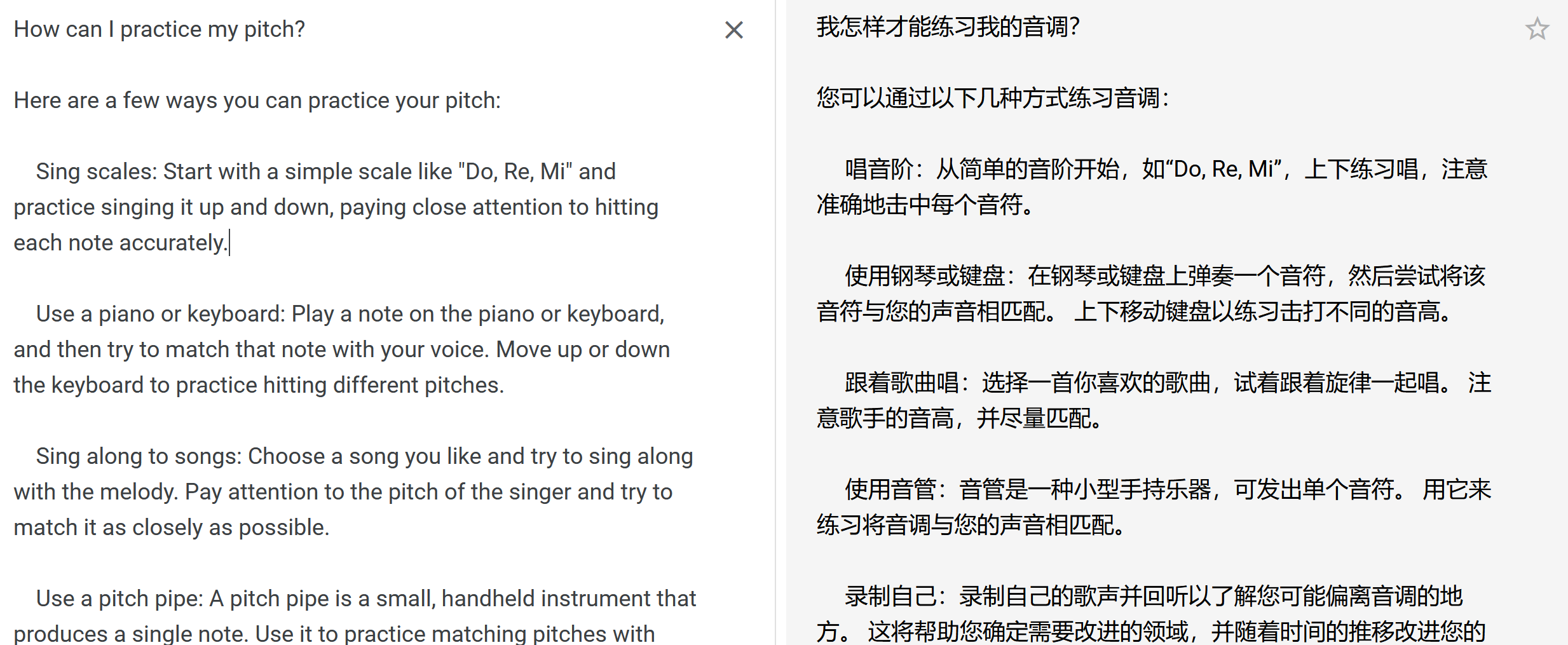
Here are a few ways you can practice your pitch:
Sing scales: Start with a simple scale like "Do, Re, Mi" and practice singing it up and down, paying close attention to hitting each note accurately.
Use a piano or keyboard: Play a note on the piano or keyboard, and then try to match that note with your voice. Move up or down the keyboard to practice hitting different pitches.
Sing along to songs: Choose a song you like and try to sing along with the melody. Pay attention to the pitch of the singer and try to match it as closely as possible.
Use a pitch pipe: A pitch pipe is a small, handheld instrument that produces a single note. Use it to practice matching pitches with your voice.
Record yourself: Record yourself singing and listen back to hear where you may be off pitch. This will help you identify areas you need to work on and improve your pitch over time.
Remember that practicing pitch takes time and consistency, so keep at it and you'll see improvement with practice.
我怎样才能练习我的音调?您可以通过以下几种方式练习音调: 唱音阶:从简单的音阶开始,如“Do, Re, Mi”,上下练习唱,注意准确地击中每个音符。 使用钢琴或键盘:在钢琴或键盘上弹奏一个音符,然后尝试将该音符与您的声音相匹配。上下移动键盘以练习击打不同的音高。 跟着歌曲唱:选择一首你喜欢的歌曲,试着跟着旋律一起唱。注意歌手的音高,并尽量匹配。 使用音管:音管是一种小型手持乐器,可发出单个音符。用它来练习将音调与您的声音相匹配。 录制自己:录制自己的歌声并回听以了解您可能偏离音调的地方。这将帮助您确定需要改进的领域,并随着时间的推移改进您的宣传。请记住,练习音高需要时间和一致性,所以坚持下去,你会看到练习的进步。
我正在学习如何使用Nokogiri,根据这段代码我遇到了一些问题:require'rubygems'require'mechanize'post_agent=WWW::Mechanize.newpost_page=post_agent.get('http://www.vbulletin.org/forum/showthread.php?t=230708')puts"\nabsolutepathwithtbodygivesnil"putspost_page.parser.xpath('/html/body/div/div/div/div/div/table/tbody/tr/td/div
总的来说,我对ruby还比较陌生,我正在为我正在创建的对象编写一些rspec测试用例。许多测试用例都非常基础,我只是想确保正确填充和返回值。我想知道是否有办法使用循环结构来执行此操作。不必为我要测试的每个方法都设置一个assertEquals。例如:describeitem,"TestingtheItem"doit"willhaveanullvaluetostart"doitem=Item.new#HereIcoulddotheitem.name.shouldbe_nil#thenIcoulddoitem.category.shouldbe_nilendend但我想要一些方法来使用
关闭。这个问题是opinion-based.它目前不接受答案。想要改进这个问题?更新问题,以便editingthispost可以用事实和引用来回答它.关闭4年前。Improvethisquestion我想在固定时间创建一系列低音和高音调的哔哔声。例如:在150毫秒时发出高音调的蜂鸣声在151毫秒时发出低音调的蜂鸣声200毫秒时发出低音调的蜂鸣声250毫秒的高音调蜂鸣声有没有办法在Ruby或Python中做到这一点?我真的不在乎输出编码是什么(.wav、.mp3、.ogg等等),但我确实想创建一个输出文件。
给定这段代码defcreate@upgrades=User.update_all(["role=?","upgraded"],:id=>params[:upgrade])redirect_toadmin_upgrades_path,:notice=>"Successfullyupgradeduser."end我如何在该操作中实际验证它们是否已保存或未重定向到适当的页面和消息? 最佳答案 在Rails3中,update_all不返回任何有意义的信息,除了已更新的记录数(这可能取决于您的DBMS是否返回该信息)。http://ar.ru
我在我的项目目录中完成了compasscreate.和compassinitrails。几个问题:我已将我的.sass文件放在public/stylesheets中。这是放置它们的正确位置吗?当我运行compasswatch时,它不会自动编译这些.sass文件。我必须手动指定文件:compasswatchpublic/stylesheets/myfile.sass等。如何让它自动运行?文件ie.css、print.css和screen.css已放在stylesheets/compiled。如何在编译后不让它们重新出现的情况下删除它们?我自己编译的.sass文件编译成compiled/t
我正在寻找执行以下操作的正确语法(在Perl、Shell或Ruby中):#variabletoaccessthedatalinesappendedasafileEND_OF_SCRIPT_MARKERrawdatastartshereanditcontinues. 最佳答案 Perl用__DATA__做这个:#!/usr/bin/perlusestrict;usewarnings;while(){print;}__DATA__Texttoprintgoeshere 关于ruby-如何将脚
Rackup通过Rack的默认处理程序成功运行任何Rack应用程序。例如:classRackAppdefcall(environment)['200',{'Content-Type'=>'text/html'},["Helloworld"]]endendrunRackApp.new但是当最后一行更改为使用Rack的内置CGI处理程序时,rackup给出“NoMethodErrorat/undefinedmethod`call'fornil:NilClass”:Rack::Handler::CGI.runRackApp.newRack的其他内置处理程序也提出了同样的反对意见。例如Rack
在选择我想要运行操作的频率时,唯一的选项是“每天”、“每小时”和“每10分钟”。谢谢!我想为我的Rails3.1应用程序运行调度程序。 最佳答案 这不是一个优雅的解决方案,但您可以安排它每天运行,并在实际开始工作之前检查日期是否为当月的第一天。 关于ruby-如何每月在Heroku运行一次Scheduler插件?,我们在StackOverflow上找到一个类似的问题: https://stackoverflow.com/questions/8692687/
我有一个对象has_many应呈现为xml的子对象。这不是问题。我的问题是我创建了一个Hash包含此数据,就像解析器需要它一样。但是rails自动将整个文件包含在.........我需要摆脱type="array"和我该如何处理?我没有在文档中找到任何内容。 最佳答案 我遇到了同样的问题;这是我的XML:我在用这个:entries.to_xml将散列数据转换为XML,但这会将条目的数据包装到中所以我修改了:entries.to_xml(root:"Contacts")但这仍然将转换后的XML包装在“联系人”中,将我的XML代码修改为
我有一大串格式化数据(例如JSON),我想使用Psychinruby同时保留格式转储到YAML。基本上,我希望JSON使用literalstyle出现在YAML中:---json:|{"page":1,"results":["item","another"],"total_pages":0}但是,当我使用YAML.dump时,它不使用文字样式。我得到这样的东西:---json:!"{\n\"page\":1,\n\"results\":[\n\"item\",\"another\"\n],\n\"total_pages\":0\n}\n"我如何告诉Psych以想要的样式转储标量?解
