点击关注公众号,实用技术文章及时了解
我们在日常开发中,经常会需要远程调用其他服务提供的接口,比较常用的 HTTP 远程代理框架有OpenFeign、Retrofit以及一些第三方封装工具类,例如Hutool提供的HttpUtil。
11月24日,Spring Boot 3正式发布,Spring官方已经自身支持使用声明式服务调用的方式来调用远程接口。
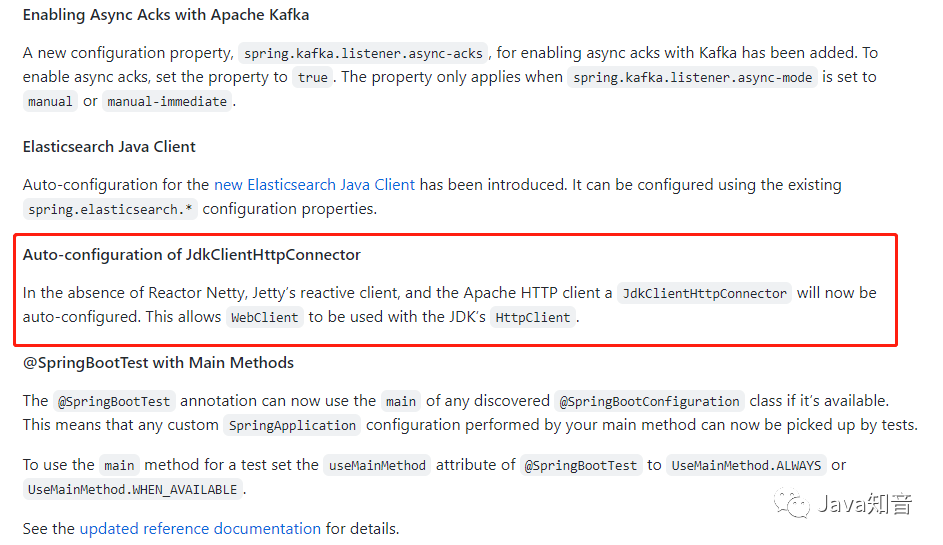
虽然类似的远程调用框架如OpenFeign和Retrofit仍然可以使用,但HttpServiceProxyFactory增加了对 Spring 框架的原生支持。如果Spring本身可以做到远程调用的话,这些大量的第三方库应该很快会被原生方法取代,我们今天来了解一下这个新特征。
声明性 HTTP 接口可以让你像定义Java接口那样定义HTTP服务,用法和你平时写Controller中方法完全一致。
声明性 HTTP 接口功能是spring-web依赖项的一部分,使用前必须引入如下依赖包:
<dependency>
  <groupId>org.springframework.boot</groupId>
  <artifactId>spring-boot-starter-web</artifactId>
</dependency>
<!-- For reactive support -->
<dependency>
  <groupId>org.springframework.boot</groupId>
  <artifactId>spring-boot-starter-webflux</artifactId>
</dependency>在 Spring 中,HTTP 服务接口是一个带有@HttpExchange方法的 Java 接口。注释方法被视为 HTTP 端点,细节通过注释属性和输入方法参数类型静态定义。
支持的注解类型
@HttpExchange:是用于指定 HTTP 端点的通用注释。在接口级别使用时,它适用于所有方法。
@GetExchange:为 HTTP GET请求指定@HttpExchange。
@PostExchange:为 HTTP POST请求指定@HttpExchange。
@PutExchange:为 HTTP PUT请求指定@HttpExchange。
@DeleteExchange:为 HTTP DELETE请求指定@HttpExchange。
@PatchExchange:为 HTTP PATCH请求指定@HttpExchange。
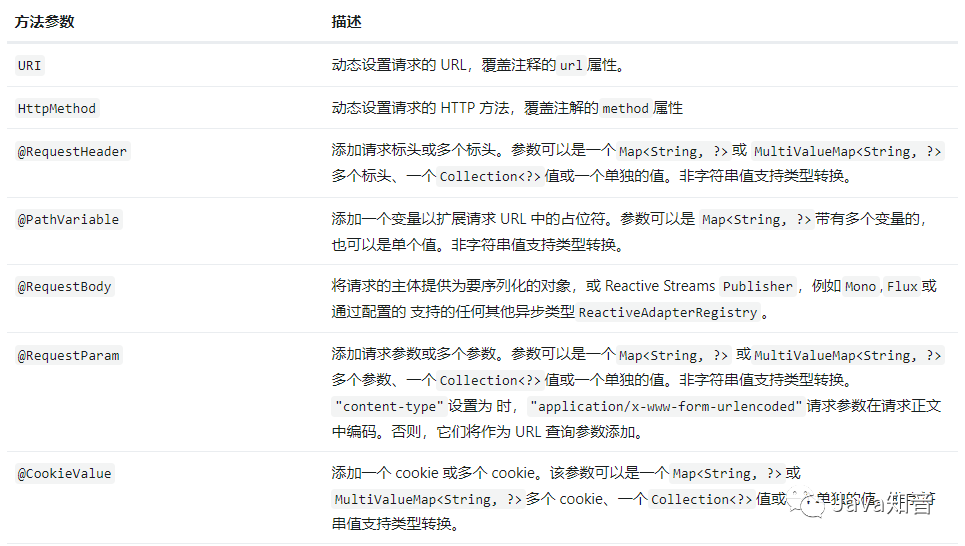
方法参数
返回值
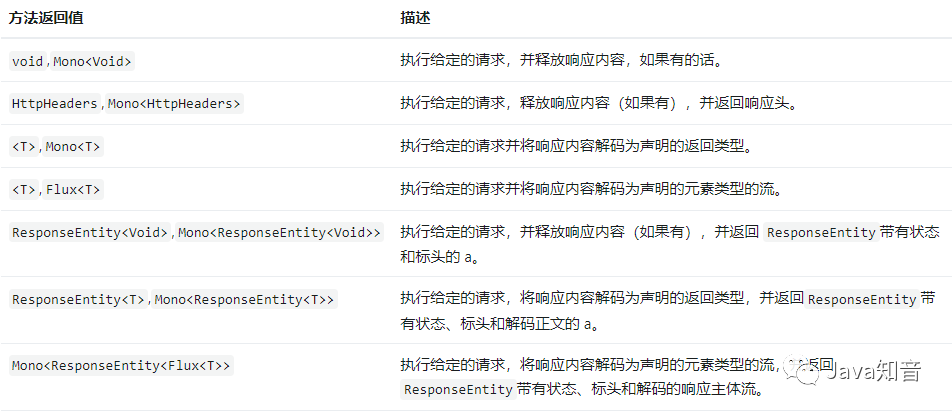
声明性 HTTP 接口支持以下返回值:
使用示例
@PutExchange
void update(@PathVariable Long id, @RequestBody User user);我们以一个简单的用户信息请求为例
0、构建HttpServiceProxyFactory:
HttpServiceProxyFactory是一个从 HTTP 服务接口创建客户端代理的工厂类。使用HttpServiceProxyFactory.builder(client).build()方法来获取代理 bean 的实例。
import com.fasterxml.jackson.databind.ObjectMapper;
import com.howtodoinjava.app.web.UserClient;
import lombok.SneakyThrows;
import org.springframework.context.annotation.Bean;
import org.springframework.context.annotation.Configuration;
import org.springframework.web.reactive.function.client.WebClient;
import org.springframework.web.reactive.function.client.support.WebClientAdapter;
import org.springframework.web.service.invoker.HttpServiceProxyFactory;
@Configuration
public class WebConfig {
  @Bean
  WebClient webClient(ObjectMapper objectMapper) {
    return WebClient.builder()
        .baseUrl("https://jsonplaceholder.typicode.com/")
        .build();
  }
  @SneakyThrows
  @Bean
  UserClient postClient(WebClient webClient) {
    HttpServiceProxyFactory httpServiceProxyFactory =
        HttpServiceProxyFactory.builder(WebClientAdapter.forClient(webClient))
            .build();
    return httpServiceProxyFactory.createClient(UserClient.class);
  }
}
1、定义一个简单的用户信息实体类:
public class User {

    private int id;

    private String username;

    private String password;

   // 省略

}
2、请求接口:
import com.howtodoinjava.app.model.User;
import org.springframework.http.ResponseEntity;
import org.springframework.web.bind.annotation.PathVariable;
import org.springframework.web.bind.annotation.RequestBody;
import org.springframework.web.service.annotation.DeleteExchange;
import org.springframework.web.service.annotation.GetExchange;
import org.springframework.web.service.annotation.HttpExchange;
import org.springframework.web.service.annotation.PostExchange;
import org.springframework.web.service.annotation.PutExchange;
import reactor.core.publisher.Flux;
import reactor.core.publisher.Mono;
@HttpExchange(url = "/users", accept = "application/json", contentType = "application/json")
public interface UserClient {
  @GetExchange("/")
  Flux<User> getAll();
  @GetExchange("/{id}")
  Mono<User> getById(@PathVariable("id") Long id);
  @PostExchange("/")
  Mono<ResponseEntity<Void>> save(@RequestBody User user);
  @PutExchange("/{id}")
  Mono<ResponseEntity<Void>> update(@PathVariable Long id, @RequestBody User user);
  @DeleteExchange("/{id}")
  Mono<ResponseEntity<Void>> delete(@PathVariable Long id);
}3、将UserClient bean 注入应用程序类并调用方法来获取 API 响应:
@Autowired
UserClient userClient;
//Get All Users
userClient.getAll().subscribe(
    data -> log.info("User: {}", data)
);
//Get User By Id
userClient.getById(1L).subscribe(
    data -> log.info("User: {}", data)
);
//Create a New User
userClient.save(new User(null, "Lokesh", "lokesh", "admin@email.com"))
    .subscribe(
        data -> log.info("User: {}", data)
    );
//Delete User By Id
userClient.delete(1L).subscribe(
    data -> log.info("User: {}", data)
);
完工,不需要定义方法实现就能进行远程HTTP调用,非常方便!
1、Spring Boot3 新特征一览:
https://github.com/spring-projects/spring-boot/wiki/Spring-Boot-3.0-Release-Notes
2、文章相关代码:
https://github.com/lokeshgupta1981/Spring-Boot3-Demos/tree/main/declarative-http-client-example
3、Spring官方文档介绍:
https://docs.spring.io/spring-framework/docs/6.0.0-RC1/reference/html/integration.html#rest-http-interface
推荐

PS:因为公众号平台更改了推送规则,如果不想错过内容,记得读完点一下“在看”,加个“星标”,这样每次新文章推送才会第一时间出现在你的订阅列表里。点“在看”支持我们吧!
在我的应用程序中,我需要能够找到所有数字子字符串,然后扫描每个子字符串,找到第一个匹配范围(例如5到15之间)的子字符串,并将该实例替换为另一个字符串“X”。我的测试字符串s="1foo100bar10gee1"我的初始模式是1个或多个数字的任何字符串,例如,re=Regexp.new(/\d+/)matches=s.scan(re)给出["1","100","10","1"]如果我想用“X”替换第N个匹配项,并且只替换第N个匹配项,我该怎么做?例如,如果我想替换第三个匹配项“10”(匹配项[2]),我不能只说s[matches[2]]="X"因为它做了两次替换“1fooX0barXg
是的,我知道最好使用webmock,但我想知道如何在RSpec中模拟此方法:defmethod_to_testurl=URI.parseurireq=Net::HTTP::Post.newurl.pathres=Net::HTTP.start(url.host,url.port)do|http|http.requestreq,foo:1endresend这是RSpec:let(:uri){'http://example.com'}specify'HTTPcall'dohttp=mock:httpNet::HTTP.stub!(:start).and_yieldhttphttp.shou
我正在尝试用ruby中的gsub函数替换字符串中的某些单词,但有时效果很好,在某些情况下会出现此错误?这种格式有什么问题吗NoMethodError(undefinedmethod`gsub!'fornil:NilClass):模型.rbclassTest"replacethisID1",WAY=>"replacethisID2andID3",DELTA=>"replacethisID4"}end另一个模型.rbclassCheck 最佳答案 啊,我找到了!gsub!是一个非常奇怪的方法。首先,它替换了字符串,所以它实际上修改了
我目前正在使用以下方法获取页面的源代码:Net::HTTP.get(URI.parse(page.url))我还想获取HTTP状态,而无需发出第二个请求。有没有办法用另一种方法做到这一点?我一直在查看文档,但似乎找不到我要找的东西。 最佳答案 在我看来,除非您需要一些真正的低级访问或控制,否则最好使用Ruby的内置Open::URI模块:require'open-uri'io=open('http://www.example.org/')#=>#body=io.read[0,50]#=>"["200","OK"]io.base_ur
1.错误信息:Errorresponsefromdaemon:Gethttps://registry-1.docker.io/v2/:net/http:requestcanceledwhilewaitingforconnection(Client.Timeoutexceededwhileawaitingheaders)或者:Errorresponsefromdaemon:Gethttps://registry-1.docker.io/v2/:net/http:TLShandshaketimeout2.报错原因:docker使用的镜像网址默认为国外,下载容易超时,需要修改成国内镜像地址(首先阿里
Rails中有没有一种方法可以提取与路由关联的HTTP动词?例如,给定这样的路线:将“users”匹配到:“users#show”,通过:[:get,:post]我能实现这样的目标吗?users_path.respond_to?(:get)(显然#respond_to不是正确的方法)我最接近的是通过执行以下操作,但它似乎并不令人满意。Rails.application.routes.routes.named_routes["users"].constraints[:request_method]#=>/^GET$/对于上下文,我有一个设置cookie然后执行redirect_to:ba
两个gsub产生不同的结果。谁能解释一下为什么?代码也可在https://gist.github.com/franklsf95/6c0f8938f28706b5644d获得.ver=9999str="\tCFBundleDevelopmentRegion\n\ten\n\tCFBundleVersion\n\t0.1.190\n\tAppID\n\t000000000000000"putsstr.gsub/(CFBundleVersion\n\t.*\.).*()/,"#{$1}#{ver}#{$2}"puts'--------'putsstr.gsub/(CFBundleVersio
我正在使用Heroku(heroku.com)来部署我的Rails应用程序,并且正在构建一个iPhone客户端来与之交互。我的目的是将手机的唯一设备标识符作为HTTPheader传递给应用程序以进行身份验证。当我在本地测试时,我的header通过得很好,但在Heroku上它似乎去掉了我的自定义header。我用ruby脚本验证:url=URI.parse('http://#{myapp}.heroku.com/')#url=URI.parse('http://localhost:3000/')req=Net::HTTP::Post.new(url.path)#boguspara
假设我在Store的模型中有这个非常简单的方法:defgeocode_addressloc=Store.geocode(address)self.lat=loc.latself.lng=loc.lngend如果我想编写一些不受地理编码服务影响的测试脚本,这些脚本可能已关闭、有限制或取决于我的互联网连接,我该如何模拟地理编码服务?如果我可以将地理编码对象传递到该方法中,那将很容易,但我不知道在这种情况下该怎么做。谢谢!特里斯坦 最佳答案 使用内置模拟和stub的rspecs,你可以做这样的事情:setupdo@subject=MyCl
我试图在我的网站上实现使用Facebook登录功能,但在尝试从Facebook取回访问token时遇到障碍。这是我的代码:ifparams[:error_reason]=="user_denied"thenflash[:error]="TologinwithFacebook,youmustclick'Allow'toletthesiteaccessyourinformation"redirect_to:loginelsifparams[:code]thentoken_uri=URI.parse("https://graph.facebook.com/oauth/access_token
